It’s Less Fun When It’s Serious
I’d heard so much about vintage shopping in Florence, and I was psyched to check out the shops.

I’m an avid collector of anything ancient; metal compacts, old lighters, and vintage lipstick holders are all collections I covet. I like to move through a flea market, a thrift store, or an antiques shop slowly, and I love finding diamonds-in-the-rough. These are special pieces among a lot of tat. When items are underpriced it’s a treat. Traders don’t always realise how special pieces are!
This was not the case in Florence.

I went to at least five vintage/antique shops—and it was unlike anything I’d ever seen in my treasure-hunting days.
To start with, there are no diamonds-in-the-rough in Florence; only diamonds. The traders know what they’re selling, and what they’re selling is pristine. Pieces from the 1930s all the way to the 1990s were in immaculate condition. And they were priced accordingly.
It slipped my mind that Italy is historically a very fashion-focussed country. Italy, historically, is the home of textile manufacturing, the birthplace of tailoring and leather manufacturing, and is birthplace to many avant-garde styles.
So it shouldn’t have been a surprise to me that so many of the pieces I saw were in excellent condition. When I’m buying a bag from the 1970s, I expect some wear and tear. The fact that the condition was pristine was stunning, and of course, came with a serious bump in asking price.
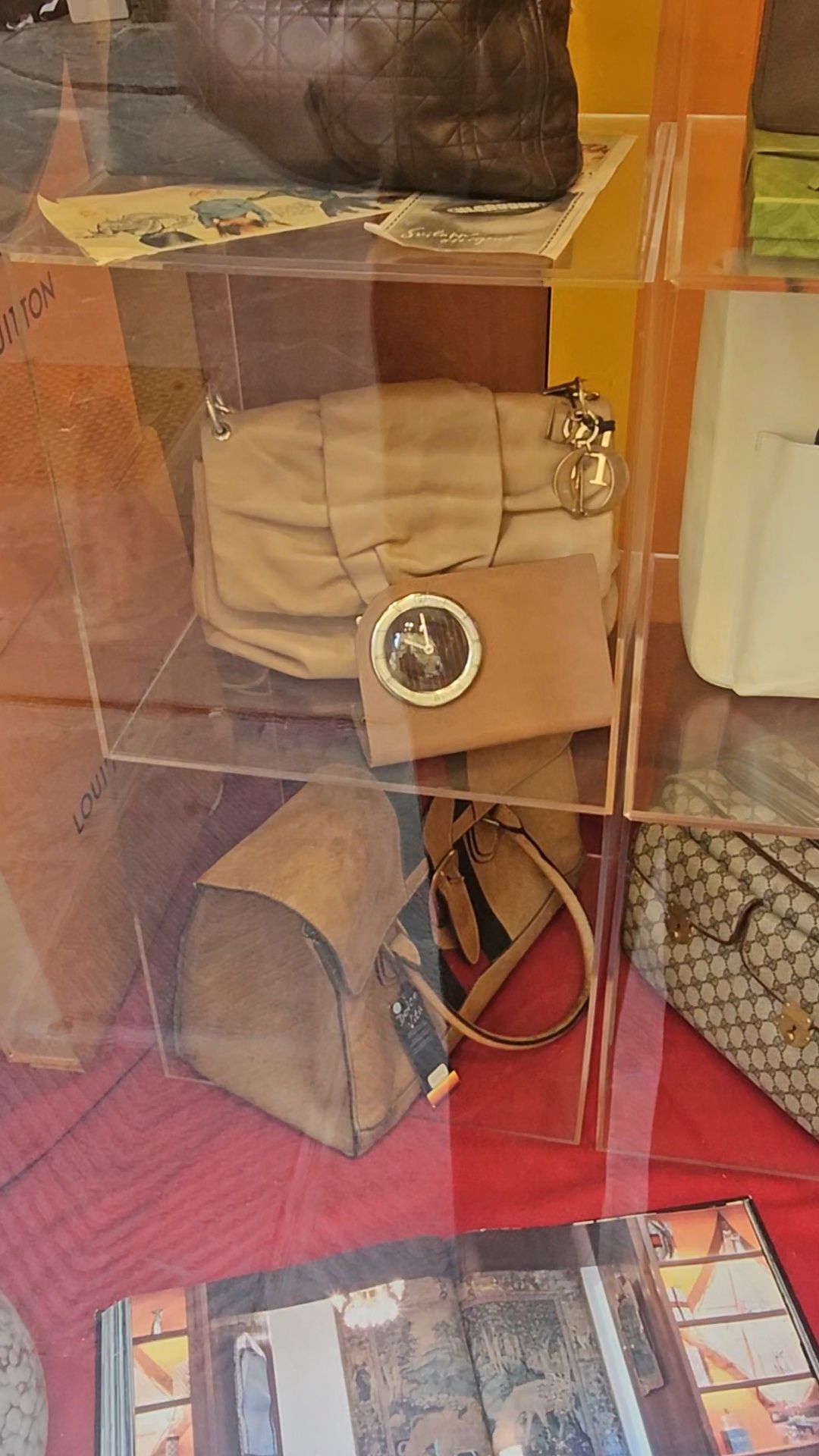
There were many label-less pieces in these shops. But the amount of couture I saw blew my mind. Chanel, Prada, Fendi, Ferragamo—rows and rows of designer pieces I wouldn’t find anywhere else. Expensive pieces stayed locked behind glass cases, or attached via cabled wire.
Antique markets were also massively different than the ones in England. For example, I recently went to a large antique market in Brighton. It was a large warehouse, where individual vendors rented glass cabinets and table space. I’d walk around, take pics of the pieces I wanted and the cabinet numbers, and have a staff member take them out.
Florence was massively different, in kind of a romantic way. The antiques shops reminded me of Mrs Kim’s in Gilmore Girls: huge pieces chaotically placed together, without a clear walking path through them. But instead of rustic New England antiques, the pieces were stunning testaments to European design.
A chandelier nearly as tall as I was, next to chiselled marble statues of warriors that wouldn’t look out-of-place in a museum, behind 12-foot bronze candlesticks. Some places I didn’t even go into, because I thought—how will I be able to move around in there? Or worse—what if I break something? What if I owe a million euros for a broken statue I’ll need to leave behind?

Not to mention, there wasn’t anything small enough to fit into a suitcase. The reason I love my little collections is partly because a vintage lighter doesn’t take up too much room in a carry-on bag. I have a collection of knickknacks from around the world because I don’t collect anything too big or heavy!
Call me crazy, but for me the fun part about sifting through treasures is to find that one that you really love. I couldn’t do that in Florence. Unfortunately for me, I found a lot of pieces I really loved; but none were small enough, or budget-friendly enough, to merit me taking any home. I’d say that Florence is a vintage/antique-lovers dream—if you’ve got space in your suitcase, and are willing to pay a pretty penny for the treasures you bring home.






Leave a Reply