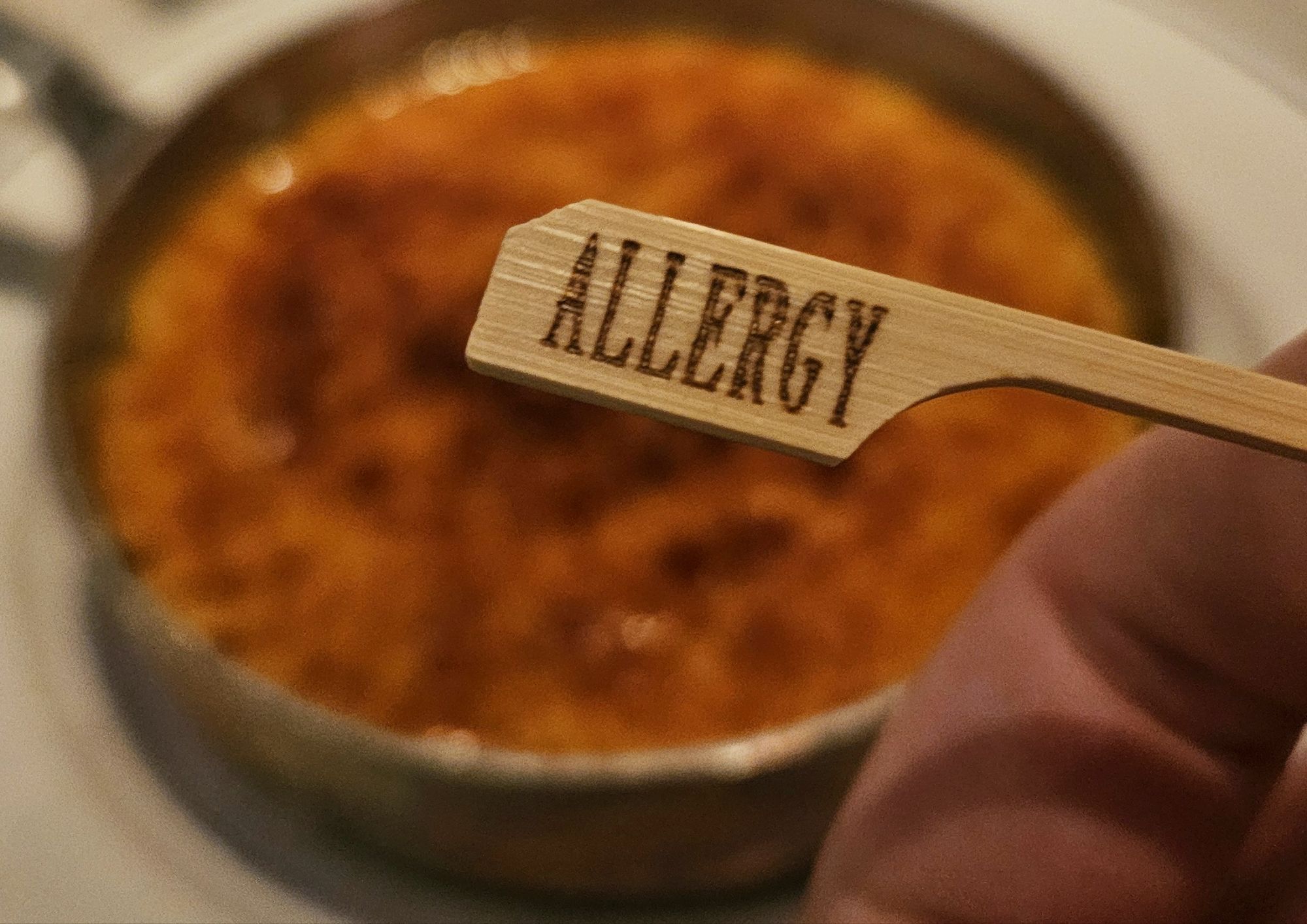

I really hate the Dubai chocolate trend, and it’s not a preference—it’s a matter of life and death.
I have an anaphylactic allergy to tree nuts (cashews and pistachios, specifically). Simply put: if I eat one of these nuts, my throat closes. This makes travelling with allergies a nightmare.
Movies would have you believe that allergies mean big, swollen lips or face hives—and that can happen. But not to me—instead, my airway constricts, and I’ve got to get to a hospital before I suffocate.
When I’m trying new restaurants internationally, the anxiety is amplified. Do I know the emergency number to get me to a hospital? Am I somewhere I speak the same language as a doctor? Having allergies abroad is an entirely new way of experiencing food anxiety while travelling.
But you carry an epi-pen, right? is usually what people ask when I talk about my allergy. I do, but that doesn’t mean that it’s a solution to an attack. My epi-pen contains a small dose of medicine. The epi-pen’s design ensures I have enough time to get to a hospital. The minute I ingest a nut, the clock starts on the question of “how soon until I can’t breathe?”. The epi-pen gives me an additional 20 to 30 minutes.
Growing up, this was only an issue if my family ordered Indian food. But more and more, pistachios have made their way into the norm—in chocolate, in ice cream, even in donuts. They’re everywhere now, and so I’ve got to be on higher alert.
The prevalence of pistachios makes me nervous in a way I find hard to express to friends without sounding dramatic. (I’ve found that “Imagine there was a gun on the table aimed at you” only gets blank stares.) But what makes a dining-out experience stressful isn’t when my friends don’t understand—it’s when restaurant staff do. And this is such a shame when it happens! Because I love trying new restaurants, both at home in London and when I travel.
My experience of eating out has made me recognize four types of reactions from staff:
“Uhhh….I don’t know. Yeah, sure. Whatever”
Call it someone apathy, distraction, or a bad day—some people just don’t understand the seriousness of an allergy.
I’ve been also in situations where it’s clear that the server isn’t being obtuse on purpose. This happens in family pubs, where our waiter was clearly someone’s 14-year-old nephew. Or where there’s a language barrier between the staff member and myself.
My move here is to always ask for someone who would know, like a manager or someone who works in the kitchen. (It’s a bit of a Karen move, but I’m not going to risk my life because someone might call me difficult.) If it’s clear that they’re not taking it seriously, I joke that if I die, I’m haunting them personally. That sometimes snaps people to attention.
The scariest places are the ones that are just paying lip service, without any follow-through. I once went to a Moroccan restaurant where the manager came over to address our table specially. He talked through all our allergies, and assured me that my plate would have no nuts. The waitress who brought my food said a half-hearted “yeah” when I double-checked that there were no nuts in mine, but when I bit into it I immediately saw green nuts and spat it out. I panicked for the rest of that meal, too anxious to leave in case my throat closed on the way home.
My last allergy attack was at an Indian restaurant where I asked a waiter if I could try my friend’s paneer dish with my nut allergy and was told it was fine. I didn’t know that some paneer is made with cashews, and went directly to the hospital. I suppose the idea of nuts being in the ingredients hadn’t occurred to him; but again, these are the experiences that can turn a nice night into something scarier!
“We take allergies very seriously—you shouldn’t eat here.”
Some places I simply cannot eat at. A bakery that has baklava as their signature dish, and makes 20 trays a day, will not be able to say with any certainty that there are no traces of nuts in any of their other pastries. Even some places you wouldn’t expect have this policy: I’ve been turned away from bars for ordering cheeseburgers, because the same grill is used for roasting nuts and meat.
These businesses are ones that I really appreciate, will never leave a negative review for, and will tell my friends about. Why? Because they’re valuing their integrity over the sale. They know the seriousness of allergies, and they know that they can’t cater to everyone. I appreciate this kind of honesty so much!
“We take allergies very seriously—you shouldn’t be eating outside your home.”
Sometimes when I explain allergies to someone, they look at me like an alien. It’s rare, but I have some people who tell me that for liability reasons, they can’t guarantee that anything in the restaurant won’t have come into contact with nuts at some point in their journey to the restaurant, and therefore they can’t guarantee anything.
My response to this is always—“I understand that’s a standard disclaimer for restaurants so they won’t get sued. But if I listened to that, I really couldn’t eat anything. Does your chef take allergies seriously? Like can I assume that what I’m asking be made will be made on a clean grill and chopping board, with utensils that haven’t touched nuts?”
Most of the time, this leads into a deeper conversation about what practises the restaurant can and can’t do. But sometimes I’ll get someone who doesn’t understand that I’m allowing flexibility here because I have to—because if I couldn’t have anything that had ridden in the same truck as a box of nuts, or was put on the same shelf as a package of nuts in the grocers, I’d never eat anything that I didn’t grow myself. It’s not that I’m not taking my allergy seriously; it’s that there are too many factors already at play to try to chart my food’s path back to its inception.
“Let’s get into it”
These are the A+ places; the pubs with menus with QR codes for allergens, the restaurants that bring over iPads to walk me through the disclaimers, the managers who come over and talk me through the risks in the kitchen. Sometimes these conversations end with “If I were you, I wouldn’t risk eating here,” but nine times out of 10, we get to a resolution (even if that means substituting ingredients or sides). The times when I’ve felt best about my meal are the times when I’ve been able to ask questions and get informed answers from someone who’s made it clear that they know how important allergies are.
I wish that I could dine out without issue, but it seems like for the foreseeable future, these conversations will be important as I choose what restaurants I feel safe eating in. So the question then becomes…
What practices restaurants implement to make it easier for people with allergies?
Allergen meuns, in-person and online
Online is especially helpful because it means I can scope out the meals I’m available to have prior to visiting.
Staff education
Everyone from the hostess stand to the back of house should be aware of the importance of allergies and dietary restrictions. To be clear, not everyone needs to be an authority on the topic! But as long as servers know where to send those questions, patrons will be safer. It can turn the response of “Oh, an allergy? Umm…” into “Oh, thanks for telling me! I’ll get Trisha, she’s our allergy expert and can walk you through the risks.”
Reservation notes options
This way I can pre-emptively identify my nut allergy, and if there’s no chance I can eat at a restaurant, usually someone will call me.
Food safety
I know it can be tempting to cut corners at work, but when it comes to clean dishes and cross-contamination, I’d implore chefs to remember that for some of us, it truly is a matter of life or death!
Honesty
There’s no shame in saying, “We cannot guarantee your safety here”—and we much prefer it to a trip to the hospital. It might put a bit of a damper on my night, but it’s nothing compared to a near-death experience!






Leave a Reply