
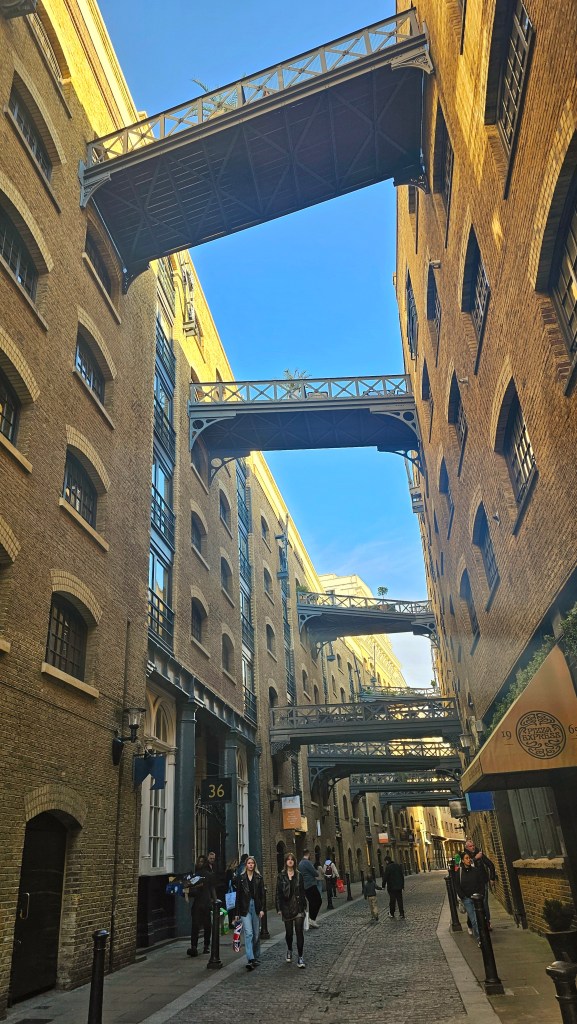
Lately I’ve been thinking about how cities dictate the direction our lives take.
The places we live and work don’t just shelter us—they present options for us to live our optimal (or less-than-optimal) lives. An elevator ensures that I’m not panting by the time I get to my fifth-floor office. Having a gym I can get to in under 10 minutes makes working out infinitely easier. Having access to fresh foods and veggies helps me get a balanced diet.
In many ways, people set up their lives for success—but we’re all impacted by the architecture around us. The way London architecture is set up makes what I want out of life easier for me in some ways, and harder in others. When I think about the things I’ve gotten used to, in terms of how London works for its residents, I think of these ways that London shapes its residents through its architecture:
Long Commutes Are Normal
Living in London, it’s easy to get around through walking, buses, tubes, and overground trains. But a one-hour journey is pretty standard if you’re heading to work or going to a party. (This is also why I feel like hybrid work has taken over after the pandemic, we all realized what a timesuck the commute is.)
Driving is Discouraged by Design
My experience in London is that not a lot of young professionals own cars, unless they live outside the city (or their parents do). Traffic in London is a huge problem, especially in rush hour, so the city is set up to keep traffic moving; instead of four-way stops, roundabouts are more common, so you’re never sitting still at a red light.
For pedestrians, London traffic lights often are split by direction of travel; walkers wait for a green light to cross halfway, then wait to get another green light to cross the other side of the street.
London also uses a series of cameras to track all the cars driving around London (on average capturing 7 million cars in London per day), and use that data to make sure that drivers are paying correctly—meaning that if you’re driving, there’s no way to evade the charges. So driving is an expensive way to get around the city, and there have been extensive measures taken by Transport for London to keep it that way, to train Londoners to take alternate methods of transportation.
Smaller Homes Train Us To Curate
Smaller spaces mean compromises, and can ultimately lead to a different way of living. Take, for example, the way I plan my meals: in Canada, I had a pantry, and we used it to stockpile lots of tinned food and dry items. Groceries would be a once-a-week trip, in a car, to a large superstore.
But London is different; smaller spaces mean no pantry and limited cupboard space, and less stockpiling long-lasting food. I walk to the grocery store, and go more than once a week so that the bags I’m bringing home aren’t too heavy.
Smaller spaces can also impact things like the flow of the home. You can’t take big swings on design when you’re renting—but even if you owned a place, it doesn’t take much to fill a space. The norm if you’re renting is that apartments will come furnished, so renters aren’t so worried about shuffling around furniture that may or may not fit into tight spaces.
The biggest way smaller-housing architecture can impact on a daily basis is that I find I curate items a lot more than I did in North America. I have a friend in Ottawa who can’t believe that I donate or give away books when I’m done with them, because we both love reading so much. She has beautiful floor-to-ceiling built-in bookshelves, and I was lucky enough to get one three-shelf set from IKEA that would fit in the space. So truthfully, I can’t justify having a lot of stuff around, because if I just kept collecting books, I’d run out of room for them. This is true of a lot of “collections”—my wardrobe is smaller so I have fewer clothes; my serving dishes all fit into two cabinets; my stationery collection fits into a hollow ottoman. I used to mind having to cull so many collections, but I now like the challenge of small space—to only keep the stuff I love and not overconsume.
Repurposed Spaces Shape Creativity
If you’re looking to start a business, space in London always comes with a premium; which means you might have to work with unusual spaces. This can mean a lot of innovation; it means in London you can find:
- Gardens in the sky: you can find green-covered rooftop bars that make space of city blocks that look over the city
- Wine bars and breweries in the arches of rail bridges in Maltby Street Market
- Churches that repurpose their space by turning into cafés during the week
- A tram repair station that’s been turned into a ballroom-style dance club
- A climbing gym that resides in the “Biscuit Factory” that’s famed for inventing the Peak Freen cookie
- Buildings that are falling apart are renovated into offices and apartments
- Sometimes, entire new neighbourhoods turn up. The Battersea Power Station was a defunct energy creator; through a huge refurbishment project, it became a neighbourhood of London apartments and businesses, and eventually had a tube stop linked to it to drive business.
Londoners Stay Aware of Air Quality
I remember when I first moved here, I read a study that said if you rode the tube for an hour’s commute, breathing in the underground air could cause as much damage to your lungs as a pack of cigarettes a week. Houses also have a lot more retention of dampness, so keeping check of mould is important (I once lived in a house where we discovered mushrooms growing in a closet!). London housing means awareness of mould and spores.
Heat Changes How We Move
Ventilation in housing is important, but in the summers, cooling off can be a challenge—air conditioners are rare unless you’re in a new building, and the windows in London don’t have screens, so people tend to get creative in the summer. I’ve noticed that outdoor public pools (“Lidos”, as they’re called here) have become more popular in recent years, as have the Hampstead Heath ponds. Some people will even decide what events to go to based on how comfortable they’ll be. This last summer we had multiple days of over 30-degree weather; without a way to cool off, that can be hard to deal with!
London doesn’t just take care of its residents—it trains them. How do you think the architecture of London impacts how you move, think, and feel? I hope you’ll let me know in the comments below. Happy travels!
 No Small Wander