
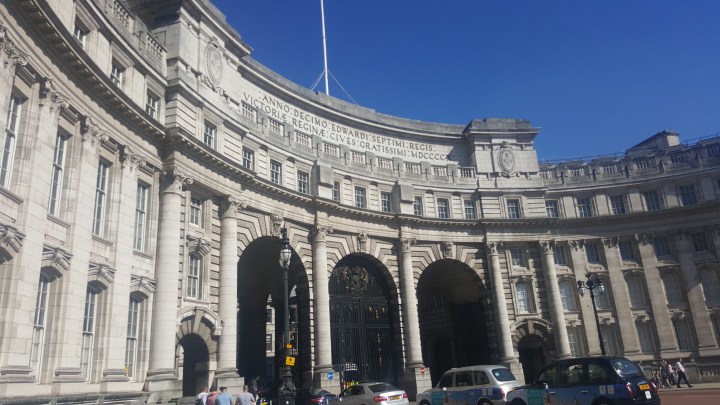
This week marks over 13 years of living in London.
It was an adjustment, certainly—although I’ve written about how hard it was for me emotionally, some of the hardest culture shock moments actually happened gradually, as I was living in London as a Canadian. Culture shock in London can sneak up on you; there many things I never thought were unusual in my hometown of Ottawa, Ontario that moving to London made me realize quickly weren’t an international experience.
If you’re thinking about making an international move, I hope that sharing some things I struggled with are helpful to you. Some things about London that surprised or confused me were:
The culture surrounding how and when people relax. I was really surprised the extent to which alcohol was involved in so many British events. Sporting events, weddings, and parties, I get; but baby showers, christenings, and social hangs all had copious amounts of alcohol that I just wasn’t used to (I once even was asked if I wanted to tailgate before a church wedding, to “keep things interesting”. I declined.). This isn’t a judgement; it’s just different. In Canada, cannabis is legal; being invited over to smoke up, or take a gummy and watch a movie, are a lot more common.
Gambling opportunities aren’t what I’m used to. I was so surprised to see how easy it was to gamble here; it seems like there’s a betting shop on every street. This would be such a hard place to live if you struggled with gambling addiction.
Online banking rocks. I know Canada has caught up a bit here, but when I first moved here and found out that all the banks talked to each other, and you could send money to a friend without fees or a third-party app like Paypal, my mind was blown.
Public and private school mean the opposite in Canada than they do in the UK. In Canada, public is normal/state-standardized and private is fancy/paid for privately. In the UK, it’s the opposite, so you’ll hear people brag about going to public school, which was a weird conversation to have…
London doesn’t have a “downtown”. “Central” London—zone 1, if you’re looking on a tube map—is full of entertainment, tourism, and businesses, and not a lot of houses (unless you’re a billionaire, I assume). Every borough in London has its own features, has different styles of buildings, and are known for different things—such as banking (Canary Wharf), wildlife (Richmond), where the posh kids live (Chelsea), where the posh youth buy after getting married (Earlsfield), where the hipsters and musicians live (Camden), etc. There’s not one “cool” neighbourhood; they’re all cool to someone, based on what you’re into.
No city planning revolves around a grid system, which makes exploring a must. In Canada, almost all city planning—especially in the centres of cities—is set up in “blocks”; you can go a block north, one west, etc. and not get super turned around. But in a city with such a long history like London, you can see that when people settled in London, they built wherever they could, usually around rivers. So you can go to Covent Garden, or Seven Dials, and if someone says “take a right at the dial”, there are five options to choose from. It also means that you can wind up somewhere on the other side of the business, and there’s no easy access; you have to go back the way you came to hit the street you’re targeting, because your instincts took you down a dead-end. It means the best way of finding things really becomes walking! And speaking of addresses…
Postcodes are such a mind-meld in London. The postcodes in London are so specific, which is nuts for a Canadian (where I grew up, in Eastern Ontario, all the postcodes began with K, and that’s roughly the same size as the entire United Kingdom). In London, if you’re in the South-West, your postcode starts with SW. If you’re East, it’s E, South-East is SE…you get the idea. So you can tell from the postcode you’re given roughly what part of London you’re going to!
The elevator problem. In the UK, when you walk into a multi-story building, you’re on the ground floor. One floor up is one, two is two, etc. In Canada, if you walk into a tall building you’re on the first floor. One floor up is two, two floors up is three, etc. I think this is because basement units are so much more common in Canada. But it really messed with my head once when I was giving a courier directions!
Time zone changes aren’t consistent worldwide. There are two weeks between the clocks “springing forward” and “falling back” in North America and the UK—so for most of the year it’s 5 hours difference…unless it’s 4. Or 6. Such fun!
People seem very keen you know the difference between regional accents. I thought there was only one accent to be British, and boy was I wrong—here are so many accents in this country. I can’t tell who’s from the North vs South, and some (not all!) seem very disgruntled by the fact I can’t distinguish them.
London is big, but well-connected. You have to budget an hour, but between the busses and tube, you can get almost anywhere in the city within an hour.
You have to tap to leave the subway. This isn’t a thing in Canada (or in a lot of other European metros I’ve taken) but because you get charged based on how many zones you’ve travelled through, you need to have your card ready as you leave the station. Some tube stops don’t have barriers, which means you might find a huge charge on your card the next day if you forget to tap out (TFL will just take the maximum amount it can).
Cheese is cheaper, and somehow better here. So is chocolate.
Cashlessness. When my Dad visited last year, he asked how much money to bring, and I told him honestly, none! Everything is spent via card; some cafes don’t even have the capability to take cash. It makes me wonder how inaccessible the world is getting to homeless people, or those without bank accounts.
Looking the other way first before crossing the street. Those “look left” and “look right” signs painted on the ground have saved my life more than once!
Historical buildings abound. I wrote last week about the ways history shapes the architecture of London; you don’t have to go to a museum to see living history of the city. You see Roman ruins when walking through London Bridge; Mercato Market in Mayfair has repurposed a Grade-I listed church; I’ve even been to a Wetherspoons in a repurposed bank. Buildings aren’t torn down, and built back up again, as regularly as in North America; here, they just repurpose the charm of the older designs!
Charity shops are smaller, but more common. Anyone who’s been to a Value Village can relate to the sheer size of a Canadian charity shop. Here, the charity shops are smaller, but you’ll get two or three in the same street, so it kind of evens out.
I’d trust a friend-of-a-friend before Google or Yelp. Business here can be…odd. I’m talking art dealers in what I assumed were abandoned warehouses; whisky distillers working out of their apartments; beer makers setting up shops in empty spaces in the arches of bridges. But odd physical spaces aren’t a clue that someone is sketchy, the way I would assume they’d be in North America. So much business gets done on reputation alone, so building connections in the city if you’re looking to see interesting things is very important.
Quality of life is baked into work here. Pensions aren’t optional if you’re working at a company with 50+ employees; I get 26 PTO days as standard with any job; “sick days” aren’t a thing. I much prefer this setup at work; I never feel guilty for taking the time I need to get better!
Smaller apartments mean careful curation of “stuff”. I have a friend who can’t believe that I get rid of (donate or gift) books I don’t think I’ll reread. In Ottawa, you can get a lot more space than you can in London for the same price. But real estate here is so expensive, especially if you’re renting, that I just can’t justify keeping things I don’t use or like. This also includes clothes, kitchen appliances, and shoes; there comes a point where I just can’t be a packrat anymore, and have to let things go. Otherwise there’s no space for new books to go!
The crowds. There are times and places where this is especially bad; like on public holidays, in tourist-heavy areas, or during Christmas. But I wasn’t used to being one of a thousand people on the street, in the subway, or in a shop. It can be truly overwhelming sometimes just how many people live in, or visit, London!
It’s so easy to travel from London. When I left Ottawa, the city had three ports of exit: one inter-city bus station, one train station, and one airport. Getting to London was like being thrown in the deep end in terms of access to other countries. I’m embarrassed to say that I assumed London also had only one major train station (when there are actually 14 major terminal stations), and I missed a train heading north because I went to Waterloo. Between that and four airports, it’s so easy to get most places inside and outside of the UK!
How much I’d love it. When I landed, I really thought that I’d get an internship, and go back to Ottawa with some work experience that would land me a job. Instead, I got the chance to build a life I love in London, and I haven’t looked back—because I love the people and experiences that have made me call London “home.”
Have I missed anything that surprised you when you visited London? I hope you’ll let me know in the comments. Happy travels!
 No Small Wander