
If you’re looking for the answer to “What is the best day trip from Lisbon?”, I’ve got your answer: it’s Sintra, Portugal. I went last week for a four-day trip surrounding a wedding, and I got to revisit the beautiful countryside—full of village quaintness, national park attractions, and so many castles!

Why is Sintra so popular?
Sintra was full of people, wherever we went. So what makes this countryside location such a fun place to visit?
In short: Sintra is a lovely break from the city. In the middle of town you have many places to eat, drink, and shop—but beyond that, most of Sintra is actually a national park built on a mountain, with lots of history dispersed throughout stunning nature walks. If you’re looking for a break from the hustle and bustle of a city like Lisbon, this is a perfect break—take in the sights, eat some wonderful food, reconnect with nature, and explore relics of the past.
How can I get to Sintra?
We took an Uber from the airport in Lisbon to our hotel in Sintra. It’s a short drive to Sintra; we spent only 30 minutes in a car! We opted for an Uber, which cost roughly 18 euros (not including tip).
When trying to figure out how much does a train cost from Lisbon to Sintra, the answer surprised me. The same trip on public transport would have taken roughly 2 hours, and cost about 2 euros for the bus into the city, then between 7–14 euros to train into Sintra. We decided that the car was worth it!
Sintra: What to do
If you’re wondering, why is Sintra famous? you’re not alone—not a lot of people are familiar with little piece of Portuguese paradise. But whether you’re looking for a Sintra day trip or a longer stay, here’s what’s inspiring people to take the journey:
Historical sites: There is so much history in Sintra, that comes alive with tours! Top places to visit include Pena Palace, Quinta da Regaleira, Moorish Castle, National Palace of Sintra, Park and Palace of Monserrate, and Queluz National Palace.
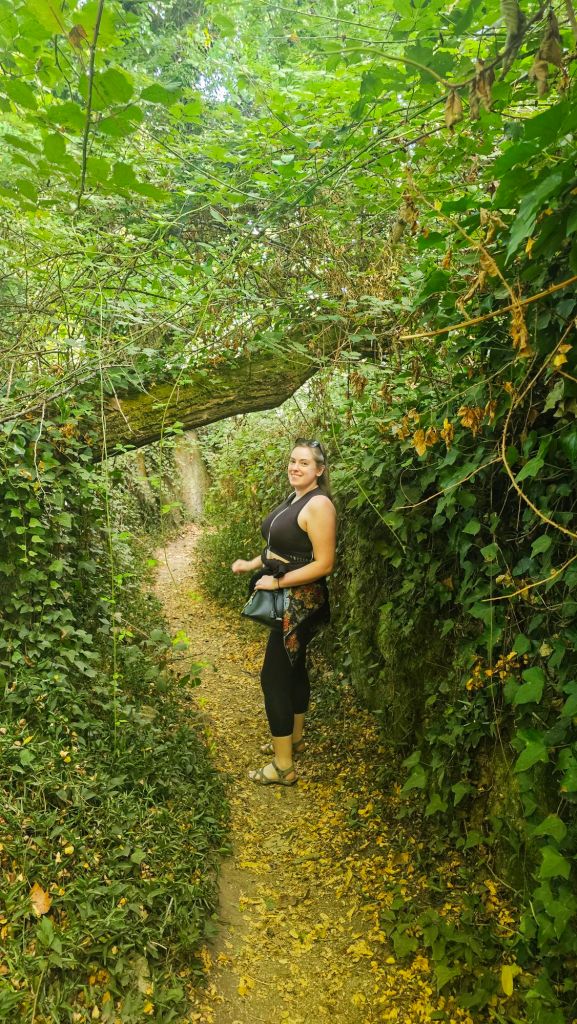

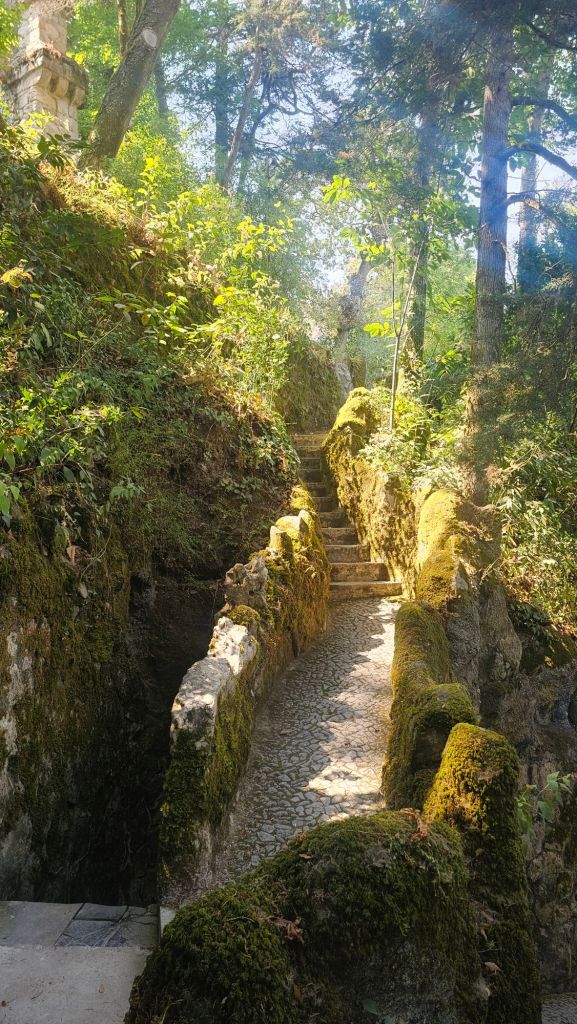
Nature. If you’re looking to take a break from the hustle and bustle of city life, Sintra is a great place to hit the reset button; trek through the national park, or visit the Lagoa Azul (Blue Lagoon) and the lakes at the Valle dos Lagos. Or take a short drive to a nearby beach for some sunny swimming and windsurfing!
Sintra: When to Go
Both times I’ve gone have been in the summer—once in July, and this month in August. I will say that I was very careful, however, of the sun; two summers ago in Porto, Portugal, I got heat exhaustion because I wasn’t careful, so this trip to Portugal was full of sun hats, staying in the shade, and carrying a huge bottle of water everywhere.
The best weather for Sintra is June, July, and August, where there are the least amount of rainy days, and average weather temperatures in the 20- to 30-degree range (although speaking to locals, I found out that there were a few days in August that hit 45 degrees—way too hot for me!). September and October are also pretty mild, with temperatures hitting the low 20s but the chances of rain increasing to 3–8 days per month.
I’ve been to Sintra twice—once with gorgeous weather, and one where it was windy and cold. Visiting Sintra when rainingwasn’t as enjoyable as in the sunshine, but I still had fun, so don’t let bad weather change your plans!
Things to know about Sintra
Depending on who you’re going with, and what you’re looking to get out of your trip, here are some things I think you should be aware of in Sintra:
Transit can be tricky. To be fair, Sintra is no different than other countryside towns I’ve been to in terms of infrastructure; I found the busses a bit unreliable, and was forced to take Ubers to places that public transit wouldn’t get me to. But one of the things that differentiates Sintra is the fact that the further up the mountain you go, the less options you have for routes; it’s one winding, hairpin-turn street, that goes only one way. You might find yourself wondering why Maps is taking you a certain route going all the way up the mountain to go down again, but there aren’t other options. If you have a car and a place to park, this might mean that a road trip is the best way to get around; I don’t have an EU license, and I found the rates for Ubers were quite reasonable.
The mountain terrain makes for steep hikes. Especially in places like Pena Palace and Quinta da Regaleira, there are a ton of steep hills and steps. I saw many families on my tours, and I can imagine that Sintra for kids would be a lot of fun, but I can’t imagine that Sintra with a stroller is easy. There were definitely times where I was sweating and struggling with all the up- and downhill walking, and having tons of stairs. If you’re someone who identifies as mobility-impaired, my suggestion is to research venues ahead of time to ensure that there are ramps, not steps, everywhere you want to visit.
It’s cooler than other Portuguese towns I’ve been to, but still gets quite hot. This might be because there were trees everywhere, or the proximity to the ocean, but I really liked the fact I could always duck into the shade. However, I would still keep overheating on my mind – bring some sunscreen and a water bottle with you!
Sintra without a tour? Totally fine. Sintra without tickets? Nightmare. If you walk up day-of to tourist attractions, it’s possible that you’ll get turned away because all the time slots are full. Getting tickets ahead of time will help fix this problem!

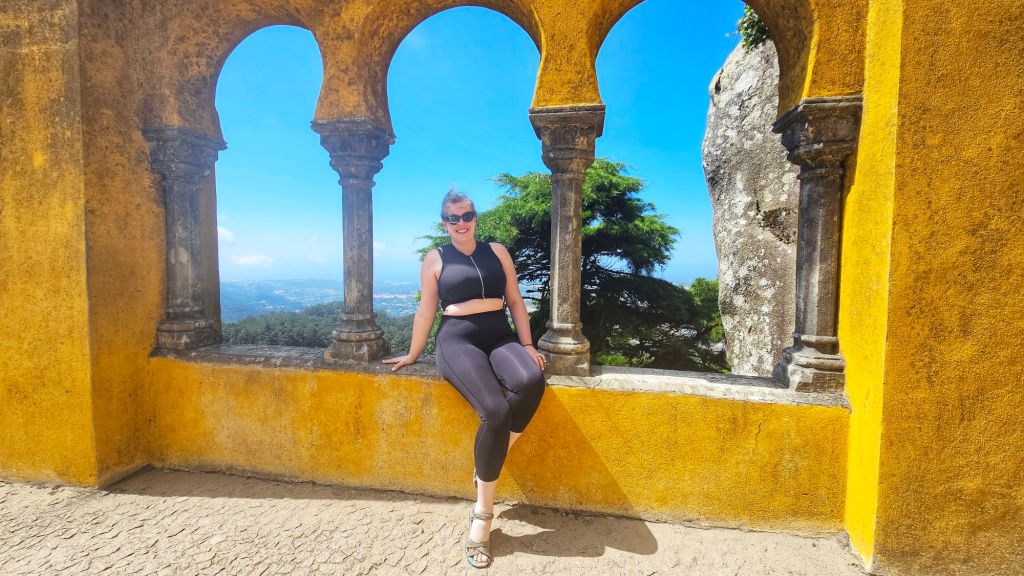

Is a day in Sintra enough? How many hours do I need in Sintra?
Honestly, a two days in Sintra wasn’t enough for me; even though I was excited at how much I got done in the limited time I had there, I really could have used another 2 or 3 days to check out all the things I wanted to see.
With that in mind, if you only have a day in Sintra, I would be think carefully about one area or attraction you’d like to check out, and then make a day around it. Trying to hit every palace, the town centre, and the beaches is a surefire way to exhaust yourself (remember; it’s built around a mountain, there will be lots of uphill walking!). I’d say that if you’re doing a day trip, give yourself between 6–8 hours to enjoy the sights. Don’t forget to take into account the travel time; getting to Sintra isn’t hard, but getting around within Sintra can take a bit more time, because of the one-way streets.
Sintra: Is It Worth It?
If you were to ask me, Is Sintra worth the hype? My answer is—definitely! I’ll be doing more in-depth reviews about the Sintra attractions I loved, but speaking honestly, I wish I’d been able to do even more. I’ll definitely be returning!

 No Small Wander