
I’ve been really lucky this year, to travel as much as I have.
I use the word “lucky”, because I want to acknowledge that travelling comes from an enormous place of privilege; I have enough money to go where I like, enough time to research the best rates and travel deals, and loved ones to travel with.
One of those privileges is the fact that I have a day job that has a generous PTO (paid time off) policy. This year I was so careful to make a plan for every day off; taking time around long weekends and bank holidays meant that I could maximize my time off, as did travelling in the evenings after work, or taking off half-days and working in the morning so that I could save those 4 hours for later in the year.
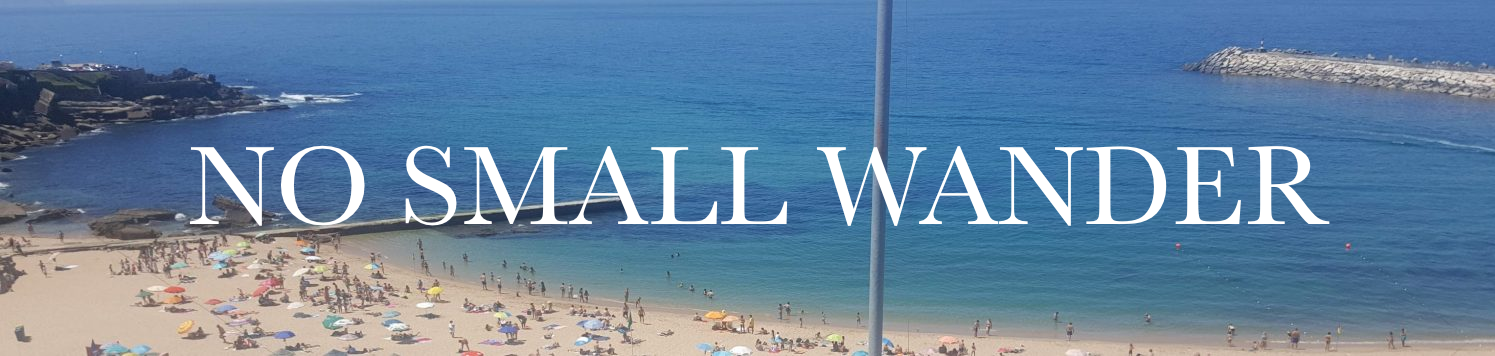
Two days ago, I got back from Sintra, Portugal. I went for a wedding, but we arrived 3 days early to explore the countryside. During one solo trip to a castle, I was stuck in the line on a hot day when I realized my leg was shaking. Two days of hiking on a mountain will do that to you, I thought. Maybe I should drink some water.
Five minutes later, I was sitting on the floor in the shade, trying to calm my racing heart through deep breathing.
My legs felt numb, and I felt cold, even though it was midday in a tropical climate. I felt a ringing in my ears.
I recognized this for what it was: an anxiety attack.
I’m strangely calm as I’m typing this; five years ago, even talking about an anxiety attack would have made me feel light-headed. But I’m far enough along on my mental health journey that I can discuss this without self-judgement. It’s not the first time that I’ve had a mental health flare-up when away from home; it can be pretty scary, but talking about it isn’t. And I hope that if sharing my experience can help someone, I figure it’s worth it.
Because this wasn’t my first episode, I knew what to do. Grounding exercises: wiggle my toes in my shoes, try to focus on naming what I was seeing (I like to look for 3 squares, then 4 red things, then 5 soft things), and breathe deeply. I stopped myself from turning on Tiktok to distract myself, and put my phone face-down in my purse. I really tried tuning into my body.
Within an hour, it had passed. I went on the tour, pacing myself and resting often. And I was able to bounce back temporarily, which I was grateful for. But when I met up with my partner later, I felt more exhausted than I had in days. When I spoke to my partner, he pointed out to me that throughout our trip, I hadn’t been resting—I’d gone from mountain to village to castle, with lots of hiking and not a lot of water. It made sense to him that I was exhausted, and that my nerves were shot.
The next day, I slept until 15 minutes before our breakfast buffet closed. I went to the hotel lobby, ate something slowly, and then went back upstairs and laid down. We turned down the cleaning service to rest, and until an hour before needing to leave for the wedding, I closed my eyes and dozed.
This was really what turned the trip around for me—resting meant that I was able to spend the rest of the trip feeling more engaged with my friends at the wedding, staying on top being mindful of the heat, and not ignoring my body’s cues for hunger, caffeine, water, and sleep.
But truthfully, the fact that this has happened more than once was a bit of a wakeup call for me. Travel is a chance to experience new things, and when I’m fending off panic attacks, being open to new experiences becomes difficult. If I’m spending all my time going going going without rest, then sometimes, my body will take a forced rest for me.
During my rest, I googled if anyone else felt this anxious while travelling—even if they enjoyed it as much as I do. The results were stunning; it seems that Travel Burnout is a real, recognized condition, that stems from the physical, and mental exhaustion that comes from the challenges of travel. It can manifest as things like, feeling uneasy in an unfamilliar place; feeling unsafe; not understanding the language that’s being spoken to you, or the words on signs and billboards; being so stressed that you opt to cancel plans or stay inside where you feel it’s safe; or feeling unmotivated to push yourself to get the most out of your trips. I was surprised to find this is a natural part of intense travel, and one that can be corrected for, if you know the signs and want to make changes.
So how am I going to combat travel burnout? The answers are complicated, and not really what any traveller wants to hear—and I want to stress that although this is how I’m tackling my problem, there are a lot of solutions to this phenomenon, and what works for me might not work for you. But here’s how I’m planning on combatting my travel burnout:
I’m going to spend some of my PTO at home. Honestly, this is something I really don’t want to do. I love travel, and I like that I get the privilege of doing so much of it with my office job. But I don’t think that the pace I’ve been going at is sustainable, so I’m thinking that closer-to-home relaxation might be the ticket to getting some proper rest. (And if the worse comes to worst, I can always practise tourism where I live).
I’m going to plan pack fewer activities, and more rest, into my trips. Again—I don’t want to do this. Going somewhere for a short amount of time means that I try to get in as many things as possible (because who knows if I’ll ever be back?). But I think that scheduling rest is the best way to get the most out of these trips. Planning a high-energy activity every day of a trip is something I’ve been doing without thinking, but the more I travel the more I realize this pace isn’t sustainable.
Planning in rests during the day is essential to keep up stamina, so for me this will look like either alternating intensity of days (like a full day of hiking on a Monday, followed by a Tuesday spent by the pool with a book), or a schedule that puts a bit of rest in each day (like planning a museum tour in the morning, and a nap in the afternoon before dinner).
I’m going to continue practising grounding exercises. The problem with mental exercises is that they’re like physical exercises; if you don’t practice regularly, soon you’ve lost the muscles needed for the impact. Remembering breathing exercises, the Look/Feel/Name practise, and full-body scans are all tools that can help when I’m anxious will be really important.
I’m going to try to tune into my body’s cues more. When we’re not comfortable, our bodies give us little whispers that something’s up—yawns when we’re tired, indigestion when food isn’t sitting well, etc. I’m pretty good at “powering through” these feelings when they’re inconvenient, but I’m realizing that not being receptive to what my body’s trying to tell me is a bad idea. After all, what starts as dehydration can soon become dangerous in the hot sun (and I don’t want to experience heat exhaustion again!).
I’m going to keep in mind that a trip with overwhelm is a trip wasted. Of course, some overwhelm is bound to happen when travelling—part of the fun is that it’s challenging! But if the feelings of anxiety or overwhelm become too present for the entire length of my trip, it’s often the only memory I have. I still think back to my first time in Budapest, and the main story I think about is how there was a carbon monoxide leak in my Airbnb and I had to evacuate (and spent the next 14 hours feeling unsafe in the hotel room I was moved to, not going outside). I think back to a big group trip and I remember how embarrassed I was to get heat stroke because I was ignoring my body’s cues, got sick, and then slept for 36 hours. When these things aren’t dealt with, they colour the memories of the trip; so having tools to deal with them is important.
How do you manage travel burnout, or travel anxiety? If it’s something you struggle with, please know you’re not alone, and I hope you let me know in the comments.
 No Small Wander