

If you’re visiting London, you’ll undoubtedly be using TFL at some point. Transport for London (TFL) is the company that runs the tube (overground and underground) and bus services throughout London.
London has one of the best-connected transit systems in the world; I’ve never been in a position of needing to get somewhere and not having a possible route. However, it can feel complicated due to its expansiveness (especially if you’re not used to big-city transit systems). If you’re coming to London for the first time, here’s the ultimate guide for how to get around:
What you’ll need:
- An Oyster card, or a contactless Debit or Credit card (yes, a digital version is fine), or a train ticket that gives full TFL (bus and underground) access
- CityMapper, Google Maps, or another route-finding service
As an aside—CityMapper really is the gold standard for getting around European cities. Google Maps is fine for walking routes, but CityMapper will tell you not only if there are delays on the journey you’re trying to get, but also, what cars to get on for the quickest transfer. They also compare walking, cycling, and taxi routes, and include links to all if you want to deviate from the TFL.
Let’s start with payment.
The first thing you’ll need to access transit is a form of payment. Remember that London is a mostly cashless city; if you’ve shown up with cash, you’ll need to put them on an Oyster card, as even the busses won’t take coins or bills. There are machines at the entrances of most tube stations, where you can buy an Oyster card and top it up with money; most newsagents will also do this.
Another option is to simply use your debit or credit card to tap in and out. If you’ve got a British bank account, or an account where you don’t have to pay exorbitant fees to convert money into pounds, this will probably be the right fit for you. Just make sure that the contactless feature is turned on. You can also use virtual cards on Apple Pay or Google Pay.
You can use your Oyster or contactless card by holding the card on the small yellow circle (or pink circle, if you’re using the Overground) until the light goes from orange to green. If it turns red instead of green, that means you’ve got insufficient funds and will need to top up your Oyster (or put more money in your bank account)
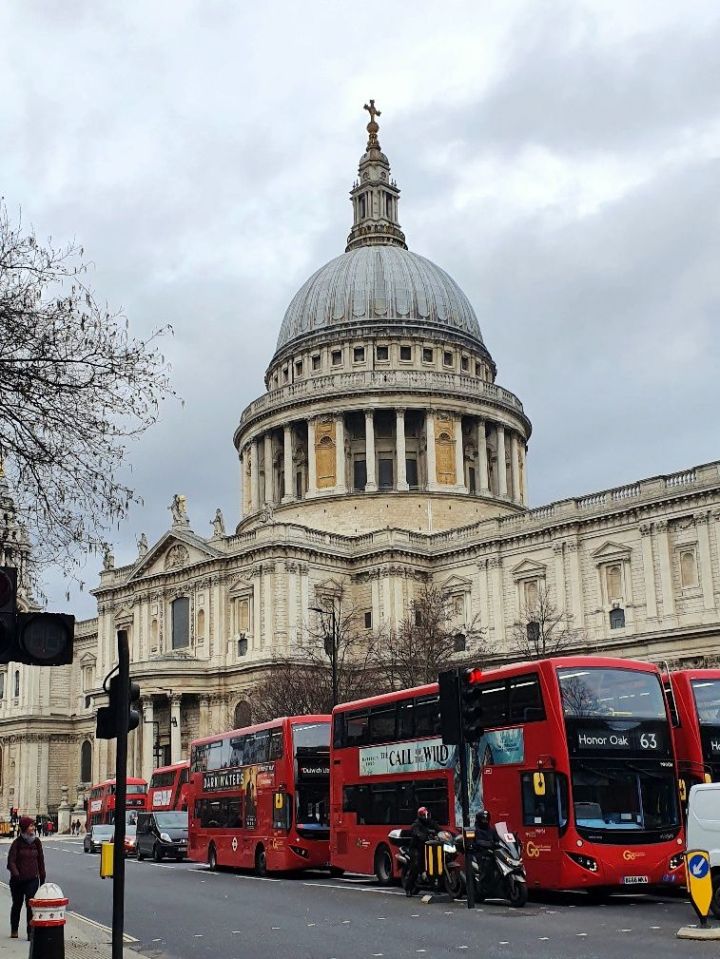
Taking the Bus
How do I ride the bus? Stand at the bus stop; when you see the bus, put out your arm slightly to flag it down. This is especially important if there are multiple busses stopping at your stop; I’ve had more than one bus pass me by just because I didn’t signal I wanted to get on it.
Once I’m on the bus, where do I pay? For busses, you’ll only need to tap in, not out; get on the bus at the front, and the little yellow circle with an orange light above it will be on the driver’s window. If the light turns green, you can pass into the bus; if the light turns red, it means payment was declined (usually because you don’t have enough on your card). In rare cases, you can sometimes find an additional second payment location at the back of the bus, where you’ll find an additional set of doors and stairs.
The standard bus payment is £1.75, and will cap out at £5.25 (meaning you’ll never spend more than that per day on busses alone). The weekly cap for busses is £24.70 (measured Monday to Sunday), which is also how much a 7-day bus pass costs (so if you’re travelling outside of Monday to Sunday—for example, Wednesday to Tuesday—it might make more sense for your budget to buy ahead of time).
If you need to get more than one bus, you’ll only be charged £1.75 for the entire trip, as long as you get the second bus within an hour of getting on the first one. It’s called the Hopper Fare. More information, including who’s eligible for discounted bus travel, can be found at the TFL website.
Does it matter where I sit? Not really. If you get motion sick easily, I wouldn’t recommend sitting upstairs. If you’ve got a suitcase, you’ll need to be in the pram/wheelchair section. Always hold onto something if you’re standing; there’s no standing on the upper deck, and the bus driver sometimes won’t move until you’ve sat down.
What’s the * I’m seeing? If there’s a little asterisk in the orange and black screen that usually shows what stop is next, it usually either means that there’s an announcement in progress from the driver, and you should be listening; or, the bus might be on diversion.
What does “on diversion” mean? If there are roadworks happening along the bus route, the bus will take an alternate route, and this could mean skipping some stops. The bus driver will usually will announce this ahead of time. If your stop will be skipped, it’s a good idea to ask the driver if it’ll be faster to get off before or after the diversion and walk to where you need to be.
What does “rail replacement” mean? Sometimes, the railways are being worked on, and overground trains are replaced with busses. These busses won’t have numbers on them, just a sign that says “Rail Replacement”. They’ll travel long distances without any stops between them, so don’t get on one unless you’re absolutely sure it’ll take you where you need to go (because there won’t be a lot of opportunities to get off).
My bus broke down/has been taken out of commission. What now? This happens more often that I’d assume; but remember, because of the Hopper fare, you’ll just get on the next bus that comes to the stop you’ve been left at, and won’t be charged twice.
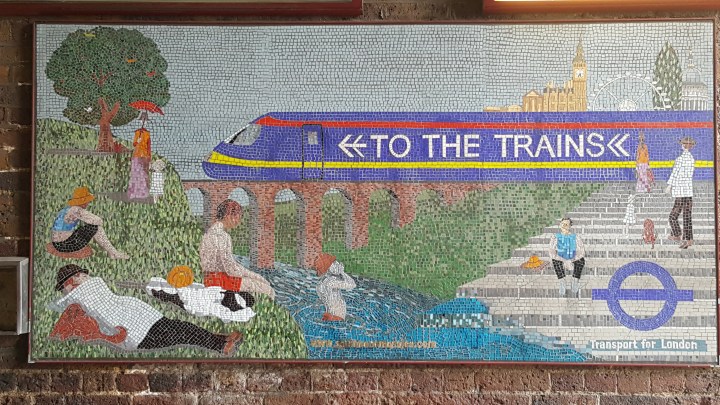
London Underground (The Tube)
Do I need a tube map? You don’t need one, but if you’re looking to explore it’s a good idea to get one; it’s a small piece of paper in most underground stations, or there’s an app where you can download one virtually.
How do I get into the tube? Hold your Oyster or contactless card to the yellow circle at the barriers, and wait for the light to turn from orange to green. If it turns red, your card isn’t working, usually due to insufficient funds. If it turns green, the gates will open. You don’t have to wait for the gates to close to touch into the tube; as long as the light is orange, you can start moving forward, and the gates will remain open as your payment is taken. Walk through the barriers, and remember to keep your card in an easy-to-access place; you’ll need it at the other end of your journey.
What happens when my Oyster runs out of money? If your journey takes more money than you’ve got on your card, the TFL will let you go into overdraft to cover it. However, the next time you use your Oyster, you’ll be rejected at the barriers and forced to top up.
How do I know what way the tube is going? Here’s where knowing your general direction of travel helps. Locate your tube based on the signs provided, and then use the virtual billboards to see the destination of travel. Announcements will usually have the direction, such as “This is the Southbound service going to Tooting Broadway”.
Always check the destination on the digital billboards, and be aware if your tube has multiple “arms” and might not stop where you need to go. For example, the Northern line splits at the North and South ends, so you might end up in Battersea when you wanted to go to Clapham. The most confusing line for this is the District Line, that branches out in several different directions the more West it goes. Quick tip: If you can identify the last stop on the route you want to go to, 90% of the time that will be the correct train to take (I’m reserving the other 10% for trains that end pre-emptively or detour!)
Where should I be standing on the plaform? Some tube stations will have glass sliding doors to show you where to get on and off the tube. If there are no glass doors, look at the ground and notice where the yellow line (the one you should be standing behind) is most worn to get a sense of where the doors will be. Be sure to step to the side to let people off the train before trying to get on (if you stand directly in front of the door, you’ll block the people leaving and slow down the process).
What does “Mind the Gap” mean? It means be careful of the space between where the platform edge stops and the train starts. I’ve actually seen someone drop into this space, and it was kind of scary watching him fall hip-deep between a train and a platform. “Mind the Gap” is a reminder that this can happen, and to be careful.
Can two people use the same card on the tube? No, they can’t—if you’re travelling with someone and you only have one contactless card between you, you’ll have to get an additional Oyster card.
How much does it cost when you tap your card on the tube? This is actually what I think makes London’s transport so great—your cost is dictated by how far you go. TFL has broken the city into zones based on how central you are (so zone 1 is the middle of London, and zone 9 is the outskirts of town) and has based fares on how far commuters want to go. If you’re going around zones 1 & 2, that will cost £3.50; if your journey is between zones 1 & 3, it’ll be £3.80, zones 1 & 5 will be £5.20, etc. This is another reason why I use CityMapper; it will tell you the cost of your journey beforehand!
Why is this tube stopped between stations? There are a million possible reasons, so try not to think about it. It’s usually a problem that gets resolved in a few minutes, and drivers don’t always let us know what’s happening if it won’t impact our journeys.
Is it true that sometimes it’s faster to walk than take the tube? In zone 1, absolutely. It’s about a 4-minute walk from Covent Garden to Leicester Square, or Charing Cross to Embankment. Always check CityMapper for the fastest route!
How much is an all-day pass for the tube? It depends on what you’re looking for; most of the tourist attractions are in zones 1 & 2, and a daily underground pass to those locations costs £8.90; however, if your hotel is in zone 5, a day pass from zones 1-5 will be £15.30.
If I see someone is sick on the tube, what should I do? If someone looks sick, see if they need help; then at the next stop, pull the alarm. Try not to pull the alarm between stations, as the fastest way to get help is at the stations themselves (the help that TFL can give is limited when the train is stopped between stations, but at the station you’ll have staff, first aid kits, access to emergency services, etc).
It’s the summer and the tube is hot. What can be done about this? Nothing. These trains were built eons ago and aren’t getting upgraded any time soon. Bring water, and a fan, if you’re susceptible to the heat.
How do I exit the station? Walk to the barriers and use the same card you tapped in with to tap out. It’s the same orange light/green light system, and the barriers will open when payment is taken, based on how far you’ve travelled. Don’t use a different card than the one you tapped in with, or TFL will think you haven’t tapped out and charge you for the full day.
What happens if I forget to tap off? If you forget to tap off, at the end of the day TFL will charge you the most they’re allowed to for a day of travel (currently £15.30 for zones 1-5).
What happens if I tap off twice? Nothing; you won’t be charged twice. The machine will assume it’s an error.
Overground (The Tube) VS Overground (Out of London)
Is the London Overground the same as the tube? Yes and no. There are 6 lines that are on the tube map, that used to be called “Overground” lines. They’ve recently been given names: Liberty, Lioness, Mildmay, Sufragette, Weaver, and Windrush. These 6 lines are part of the TFL, and therefore, contactless or Oyster cards can be used on them. These were built as new additions to the TFL, and as they were built above-ground, were called Overground lines.
However, sometimes when people talk about “overground trains”, what they’re talking about is National Rail, South Western Rail—really any kind of train that takes people out of London. What makes it even more confusing is that these trains that take people out of London often make more than one stop within London; so for example, the train from London to Guilford used to drop me off at Earlsfield Station, within zone 3 of London.
Usually when a non-TFL overground train is leaving the city, there will be an announcement warning passengers that beyond this point, contactless card will not work and you’ll need a ticket.
If I want to travel outside of London, can I use my contactless card? If you’re looking to travel outside of London, your best bet is to buy a ticket. You can get a paper one at the station, or use the Trainline app to buy a virtual one. It’s not a good idea to tap into the station, because there will be no record of you tapping out, which might trigger TFL to charge you the full amount for the day on top of whatever you’ll be paying at your final destination.
I’m transferring from a London Underground line to an Overground line. How do I do this? Again, it depends on what you mean by overground. If you mean one of the 6 TFL-run lines, when you’re on the platform you should see a small, pink circle that’s almost exactly like the one you used to tap into the station (only it will be pink instead of yellow). Press the same card you used to tap in to that pink circle until the light goes from orange to green, and then tap out at the end of your journey as usual.
If you’re travelling from a tube to a train that leaves London, you won’t have to worry about a transfer; you’ll tap out of TFL (there will be barriers), and then tap in separately to the train.
Traveling in London can be tricky, but it’s the easiest way to get everywhere you want to go. If you have more tips, or questions, about travelling in London, I hope you’ll let me know in the comments. Happy travels!
Although all information in regards to pricing was accurate at the date of publishing—and although I do my best to keep my articles up-to-date!—it’s possible that some information might change between the time this article is published and the time you’re reading this piece. Always check TFL.co.uk for accurate TFL rates!
 No Small Wander