
Sometimes, something you’ve been waiting for can sneak up and surprise you.
In another life, I was a personal assistant at Condé Nast—at House & Garden, and World of Interiors, magazines. I didn’t know much about interior design (which is the topic that both magazines are experts in, from different points of view), but I was a very good PA, and I was excited to learn.
My time at Vogue House was exciting and challenging, but had a huge learning curve. In an effort to understand the industry better, I read a ton of back issues. And that’s where I found a lot of, let’s say, “odd” furniture choices.
You know how if you look at an ad from the 50s that talks about the future, it imagines people living on the moon? And you look around and think, man, they really had no clue! That’s sometimes what it’s like looking at old design magazines. Because an editor’s job isn’t just to curate; it’s to imagine a world beyond the one we’re living in. What needs will we have? What problems will we be looking to solve? And most importantly—will we need to collapse into a sofa inspired by lawn grass?
That last one isn’t really a question. Behold, the Pratone Forever Greener:

There’s a full history on the 1972 design from Gufram here, but the Coles Notes are: this is a plastic, moveable, flexible piece that you can flop in top of or into . The spikes are made of soft, sponge-like plastic, and can bend to fit the contours of your body. I saw it in a magazine once and thought, how on earth would that work?
Is it impractical? Possibly. But the design certainly invites rest in its softness… and its difficulty in letting you stand up. This sofa (seating item? It’s hard to tell what this thing is) was in full use in during my May visit of the Pinakothek der Moderne in Munich, Germany, and I was psyched to finally see one in real life, being used by people and played with by children.
The Pinakothek der Moderne is one of three Pinakothek museums (the other two being the Alte Pinakothek and the Neue Pinakothek) that can all be found in a walkable distance for one another. Unlike most galleries I’ve been to, the art that hits you on your walk to buy a ticket isn’t just available for beauty; it’s expected that you, the person experiencing the art, are part of the exhibition.
This exhibition was called Social Seating, and as I looked around, I could see why. There wasn’t one simple, four-legged chair; instead, people who wanted to sit down were ushered into rainbow cloverleaf sofa, moveable seating snakes, and unusually-structured loveseats.
At this point I’m sure you’re thinking, why didn’t you take any pictures? And to be honest, I’m kicking myself for not doing this—however, I have a thing about photographing strangers in public places and putting them on the internet (I don’t think it’s fair to anyone who didn’t ask to be broadcast). I did take one video, and I only felt OK about sharing it because it’s the tops of people’s heads:
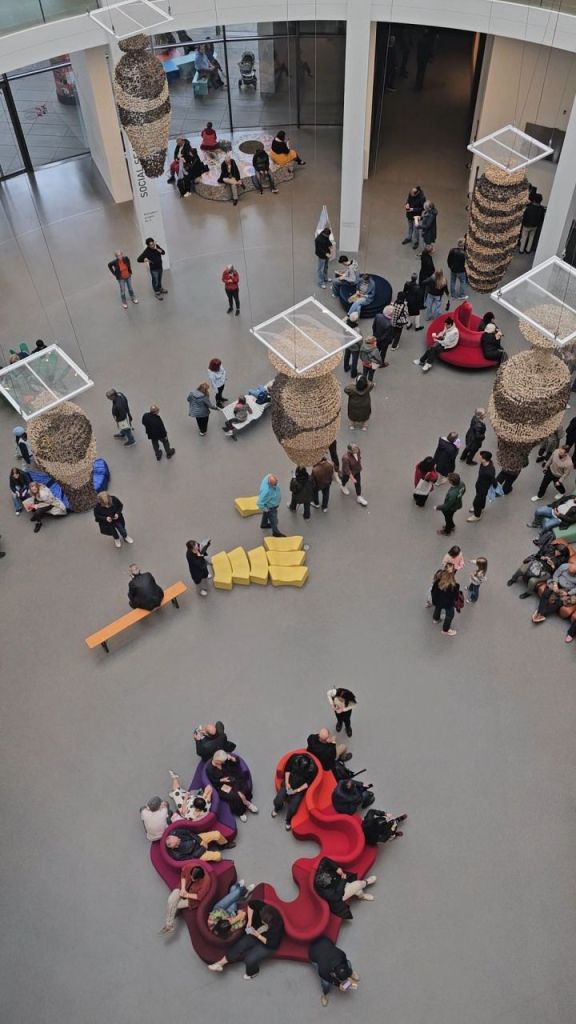
But the seats themselves were full of people; the Pratone was full of small children, running around and playing. I didn’t want to try to capture them on film, for obvious reasons. I did take some pics of the brochure they handed out, which featured IKEA-style outlines of each piece. Here are the ones I found most interesting:
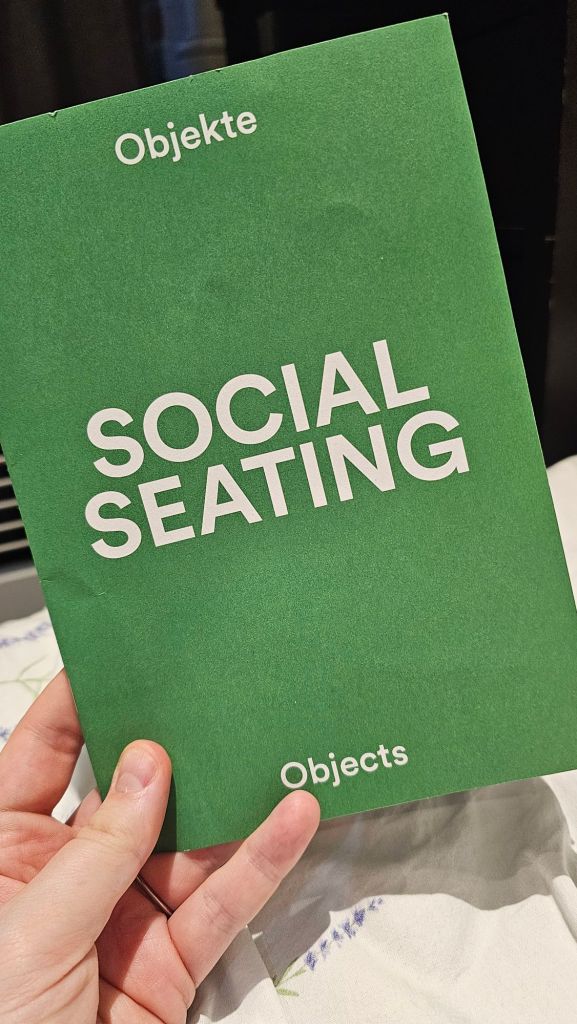

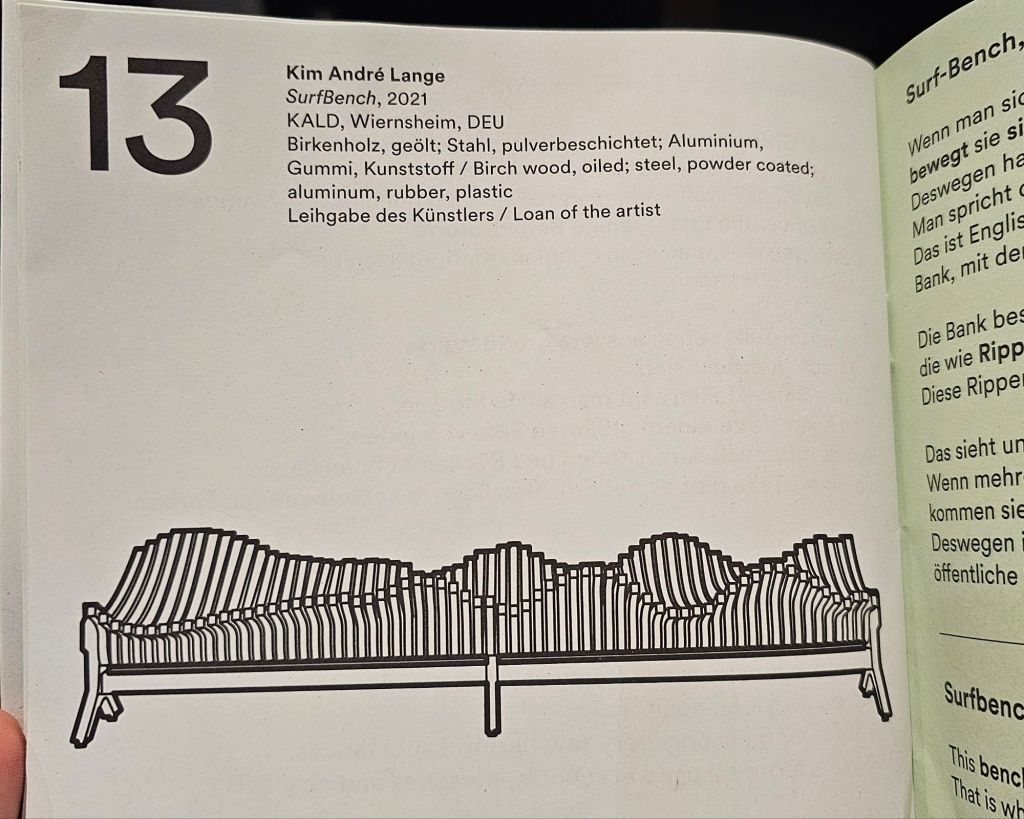

Social Seating was an exhibit that really encouraged people to engage with art, and each other; to turn to each other and ask what do you think this chair was for? or to figure out how to sit in tall grass. It was one of the cooler exhibits I’ve felt part of as more than a spectator, and I really enjoyed the fact that as soon as I arrived at the museum, my engagement with art began. I hope it’s an idea that more galleries will build on; how to get more people enjoying art together.
Would you try sitting in the Pratone? Let me know in the comments. And as always, happy travels!

 No Small Wander