
A problem that I’ve created for myself is that I both want to curate a wardrobe that looks and feels good and be sustainable about it, when the most sustainable thing I can do for my wardrobe is wear the pieces that I already have.
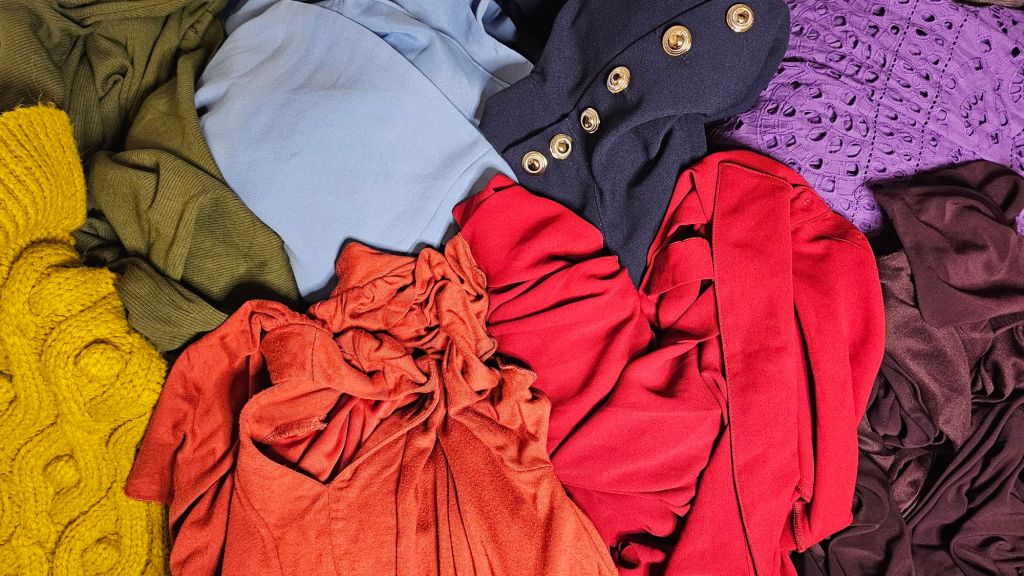
I understand that if the goal of my wardrobe is to have pieces I love, that I won’t replace every year or two, then I have to invest in more expensive pieces.
Ideally I would have had the mentality of sustainability in the forefront of my mind the entire time I was building my wardrobe—but that didn’t happen, for a variety of reasons. When I first moved to London, I was making less than £20k annually at a beauty start-up. The idea of saving up for a nice coat or other high-quality piece came secondary to having clothes to wear to the office every day—pieces I found on sale at H&M or Zara, or (if I was lucky) charity shops.
And some of those pieces have actually held up. In some cases, I’ve worn them to death—I’ve got sweaters from Zara that are going on eight years of wear. And (if they last) I can see them being worn until they run threadbare.
But even when that happens—then what?
Donation isn’t an option for clothes like this, that weren’t super high-quality and are now a decade old. The idea of someone picking them up in a charity shop and thinking “oh wow—what a lot wear this has left in it!” would be ridiculous at this point if the sweater is too worn.
Even if they aren’t threadbare, I wonder what happens to the clothing I donate to charity shops. When I lived in South West London, I would sometimes see pieces I donated hanging on the shelves on the coming weeks.
But I also lived in a place where there was a lot of incoming wealth; young couples moving from Chelsea and other posh places. I regularly found designer pieces (Prada, Moschino—once even Chanel) in the racks. These were pieces that—although never quite in my size—were still of high enough quality that you could pick them up and see them lasting in your wardrobe for a while. I had a hunch that the same just can’t be said about the fast fashion pieces I was donating.
My hunch was confirmed in an excerpt from his book Wasteland published on British GQ’s Website last year, when Oliver Franklin-Wallis revealed that only 10 to 30percent of the clothes that are donated get re-sold locally. Those that don’t are exported to the Global South, moved on to the resale markets, and eventually, to second-hand markets; to those who repurpose the fabric for their own use, such as turning leather jackets into safety equipment for famers; and eventually, tonnes of leftover scraps are collected for disposal at large, mountainous cloth dump sites.
When you see the pictures of these sites, they’re harrowing. And the article (which is worth a read!) shows a direct line from the beginning of the life cycle of a piece of clothing to the end—and commenting that in recent years, clothing is less more likely to end up in the dump due to its poor quality (it’s hard to refashion a piece that wasn’t great quality in its original form).
Even though my goal is to end up with a wardrobe where donations to charity shops don’t happen as often, I know that the life cycle of good-quality clothes is most likely still similar. I’ll wear pieces until they’re in tatters, try to salvage what I can as scrap fabric, and donate anything that’s still intact—hopefully giving it a new life somewhere else.
But I think that the life cycle of clothing will still haunt me. Hopefully in a good way—in a way that motivates me to think carefully about the clothes I buy, so they don’t end up in a landfill that can be seen from space. But it’s a question that I still wonder about; even if I take care of my clothes, mend holes, repurpose items, turn them into something new…eventually the life cycle of a piece of clothing will come to an end. And even though clothes are a necessity (I can’t just walk around naked), I struggle with the idea that my trying to find clothes I love will lead to a fuller landfill.
I know that ultimately, all I can do it try to minimize the output I’m contributing to the problem. But if you’ve got any advice, tips, or ways to approach building a wardrobe in a more sustainable way, I’d love to hear from you; please feel free to drop me a line in the comments section!
 No Small Wander